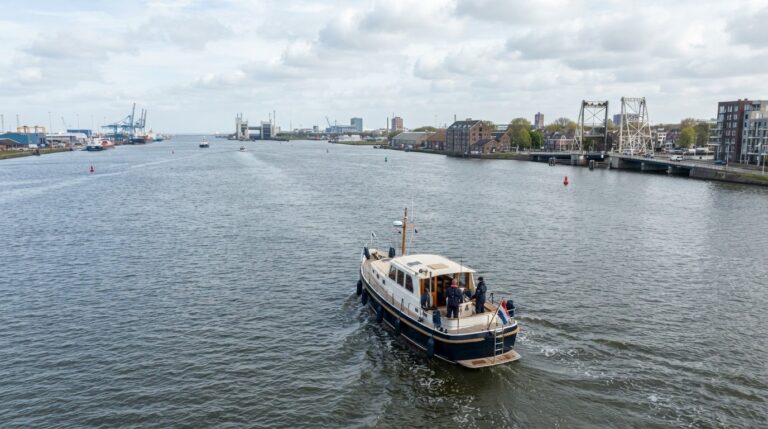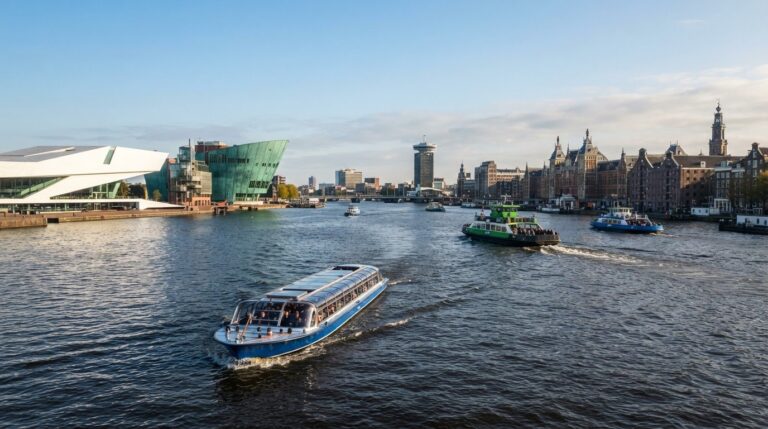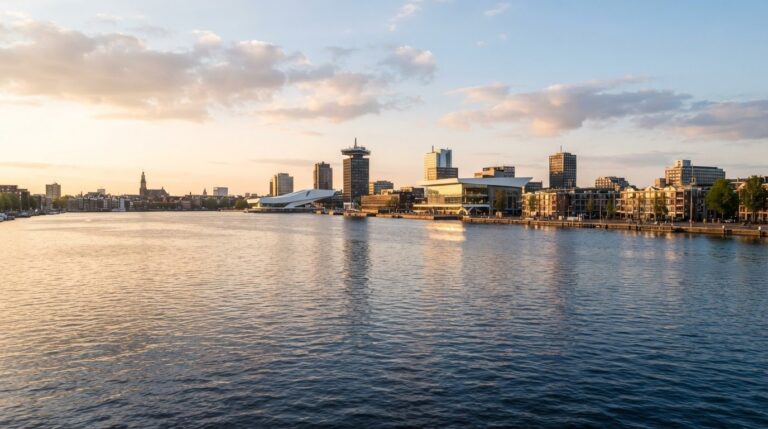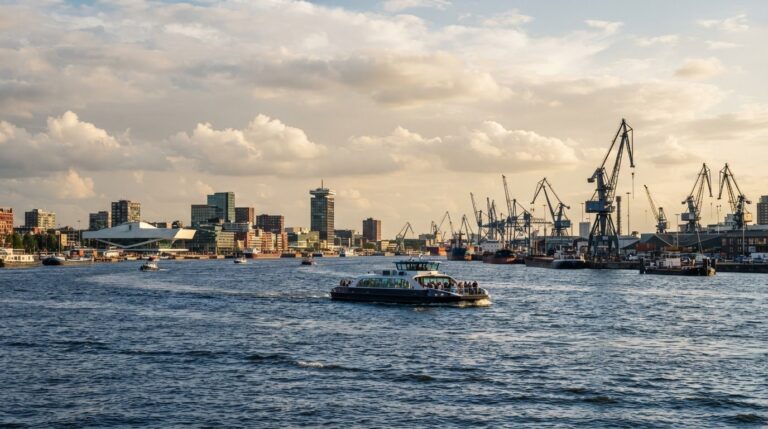
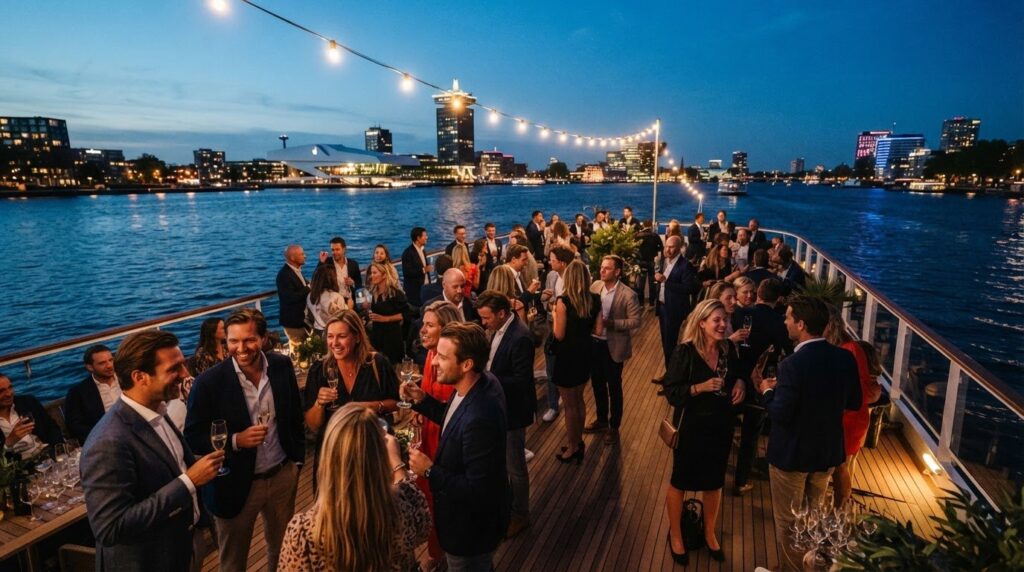
A sailing route for a large event on the IJ starts at a boarding point that suits the location and destination of your event. The route itself depends on where you want to sail and what you want to see along the way. The IJ is also a special place in winter: the Amsterdam Light Festival can be experienced from the water in season 2026/2027 from november 26 to January 17.
A big event on the IJ requires extra planning. You want to know where guests board, how the route fits in with the program and when it is busier on the water. With good preparation you keep the cruise clear and make it a festive experience.
In this article you can read which landmarks along the IJ you can use to discuss a route, how to adjust the cruise to the program and what you take into account when busy. Thus, you will get a clear picture of the preparation of an event on the water.
Key points
- Choose a starting point and end point that match the location of your event and the desired route across the IJ.
- The Amsterdam Light Festival can be experienced from the water in Season 2026/2027 from november 26 to January 17.
- When planning, take into account crowds on the water and adjust the route to the program of your event.
- Check in advance which waterways and moorings are accessible during the event; temporary closures may affect the route.
- With a private cruise you can tailor the cruise to your company and occasion.
Sailing season and busy periods
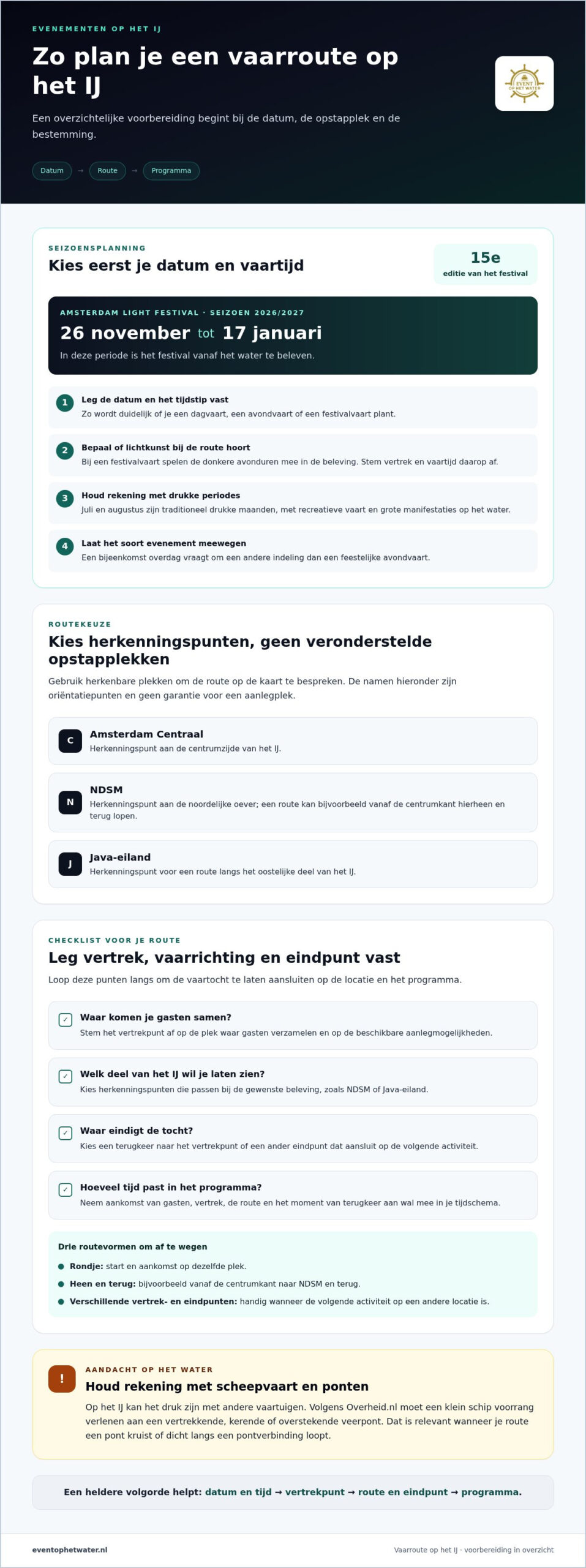
On the IJ, the best sailing time depends on your event and route. An important winter period is the Amsterdam Light Festival. In season 2026/2027 the festival can be experienced from the water from 26 november to 17 January. The Edition is the fifteenth of the festival. If you want to see the light art from a boat, you can plan the cruise around that period.
For a big event, first fix the date. Then decide how the route fits in with the program, for example with a reception on board, a trip along Light art or a cruise to another location. At the Amsterdam Light Festival, the dark evening hours play a part in the experience. Keep this in mind so that departure and sailing time match what your guests want to see.
The festival period offers a concrete starting point, but not every event follows the same calendar. A company meeting during the day requires a different format than a festive evening cruise. The starting place and the desired end point also determine how much time you spend on the water. Therefore, list the most important parts: the arrival of guests, the departure, the route and the moment when everyone goes ashore again.
A convenient preparation consists of some practical steps:
- First, choose the date and time of your event.
- Then decide whether the Amsterdam Light Festival is part of the route.
- Match the departure point to the place where guests gather.
- Plan enough space for the cruise within the program.
With that order, it becomes clear which route makes sense. An evening tour during the festival, for example, calls for attention to the view of light art. In an event without a festival visit, a smooth connection between boarding place and destination can be central. In both cases, a clear timetable prevents unnecessary haste on board.
Also take into account the shipping traffic on the IJ. At a large event, it can be crowded with other vessels, so the skipper should keep a close eye on the surroundings. According to Overheid.nl must give a small vessel priority to a departing, turning or crossing ferry. This is relevant if the route crosses a ferry or runs close to a ferry connection.
So when choosing a date, you don't just look at the season. Also think about the type of experience, the time and the route that suits it. For a festival cruise, the period from november 26 to January 17 in the 2026/2027 season is a concrete starting point. For other events, you can build the schedule from the location and program. This way, the cruise fits better with the day and what your guests want to experience along the way.
Also in the summer months, the IJ has busy periods in which events follow one another. July and August are traditionally a period when recreational boating and major events meet on the water. If your event takes place in these warmer months, include the date and desired sailing time early in the preparation via Event on the Water and plan the other parts around it. Thus, the choice of location and timing are closely interrelated.
If the desired date is outside the peak months, but you want to sail on the IJ, you can also take the regular sailing season into consideration. Compare the time of year and the type of event with the goals you have in mind. A clear choice in the seasonal planning makes the program more concrete and ensures that the cruise optimally matches the crowds and conditions on the water.
Where does the sailing route on the IJ run and what are the start and end points?
A sailing route for a major event on the IJ starts at a departure point that suits the location and the program. Amsterdam Central Station, NDSM and Java island are landmarks to discuss the route on the map. They are landmarks, not fixed boarding points. Therefore, first determine where guests will gather and which berth is suitable for departure and arrival.
From the center side you can plan a route towards Amsterdam-Noord, with NDSM as a landmark on the northern shore. An example is a cruise from the center side to NDSM and back. Thus, departure and Arrival take place in the same place. Whether this route is suitable depends, among other things, on the docking options and the program.
You can also choose the reverse direction: leave on the north side and sail to the center side, for example towards Amsterdam Central Station. If the event continues at a different location, a route with different starting and ending points may be more convenient. Match the end point to the next activity and to where guests need to go after the cruise.
Java island is a landmark for a route along the eastern part of the IJ. Decide in advance whether you want to sail along it and in what order the waypoints will be covered. Whether you first visit the center or Java island, determines how the cruise connects with the rest of the program. Use the names as a geographical orientation, not as a guarantee of a docking place.
Work out the route with these questions:
- Where do your guests meet before boarding?
- Which part of the IJ do you want to show during the cruise?
- Does the boat return to the starting point or does the trip end somewhere else?
- Which recognizable places match the experience of your event?
For a sailing route at a major event on the IJ, a fixed order helps. Write down the place of departure, the direction of sailing, any route points and the end point. This way you can consider whether a round trip, a round - trip route or a tour with different start and end points fits best. For example, you can adapt a route along NDSM and Java island to the location where guests are expected afterwards.
Also consider the transition from the quay to the program. A departure point close to the assembly point makes it easier to let guests board together. An endpoint at the next activity can actually prevent an additional displacement. With a sailing route for a major event on the IJ, accessibility, mooring options and the desired route form a single whole.
Make the route concrete before sharing the practical information with guests. Name a recognizable starting point and clearly indicate where the cruise ends. Discuss which moorings fit the planned route and program. This way, guests know where to go and how the cruise connects to the rest of the day. If you want to discuss the possibilities for your event, you can a quote for your event request.
On the IJ, it is useful to choose waypoints that fit the purpose of the meeting. Decide which places guests want to see from the water and how much space there is for a quiet passage. At Artis, flamingos can sometimes be seen from the water at the back of the zoo. Only take that with you if it fits within the chosen route and schedule. A recognizable point of interest can connect the tour with the event.
The Amsterdam Light Festival returns for its 15th edition. Do not automatically use an event or a recognizable place as a departure or landing point: first determine whether the sailing route can actually pass it and where guests board and disembark safely. Also record how much time you reserve for the cruise and which waypoints may expire when the program ends. In this way, the Tour remains feasible without the start, end point or connection to the rest of the event becoming unclear. Discuss the route and the moorings in advance with the party that takes care of the sailing.
Where is the best place to watch the event and how to get there?
The best view during an event on the IJ depends on what you want to see. From the water you can see the quays and surroundings of Amsterdam from a sailing boat. From the shore you stand in one place and watch the boat pass by. So first decide whether the cruise is central, or whether you prefer to follow the event from the shore.
During the Amsterdam Light Festival, a boat trip offers a different perspective on light art than a walk along the route. From a boat you can see the works of art from the water; from the shore you can view them from the public space along the route. Visibility varies by location and viewing direction. Therefore, choose a position with a good view of the artwork, without a quay, bridge or other visitor blocking the view.
If you want guests to view the artworks from the boat, discuss in advance which parts of the IJ the route takes. A work of art or event site may be more clearly visible from one bank than from the other. Note which locations are important to the program. In this way, the route connects to the desired view, instead of just to a starting and ending point.
The arrival also demands attention. Arrange a recognizable meeting place in Amsterdam with your guests and pass it on clearly. In addition, indicate where they will board and where the group will continue afterwards. A route plan with departure, sight locations and end point prevents confusion. Share the information digitally in advance so that guests can prepare their trip to the IJ themselves.
Upon arrival, be aware of crowds around a major event. Choose an arrival time that suits the boarding and the program, and avoid having to search for the boarding place at the same time. Provide a landmark on the Quay and explain which way guests should walk. The exact walking route depends on the mooring and the location of the event.
Those who want to watch from the shore can visit public Quays along the IJ. Follow the directions and any deposits on the spot. A place with a clear view is not automatically suitable for standing for a long time. Keep passages clear and follow directions from organizers so that pedestrians and emergency services have enough space.
Make the choice practical with these steps:
- Decide whether you want to watch the event from a boat or from the shore.
- Choose the works of art, Quays or other visible locations that are important.
- Coordinate departure and arrival according to the chosen route and program.
- Share the meeting place and travel information with your guests in advance.
At a large event on the IJ, views, accessibility and group planning come together. A boat fits well if the cruise itself is part of the experience. A visit from the shore is more suitable if you want to stay in one place. Choose a viewing location in advance and create an arrival plan so guests know where to go and what to expect during the event. After all, a well-thought-out schedule gives rest to any kind of organization; those who, in addition to local trips, are also preparing a larger foreign trip, can go through naartokyo.com discover practical methods to design routes and day plans without stress.
Which waterways or moorings are temporarily closed
An event on the IJ can affect the route if the passage is obstructed or a mooring is not accessible. Which fairway or jetty is temporarily restricted depends on the location and the measures for the event. Therefore, include in the route plan not only the planned berth, but also an alternative departure or end point.
The main question is whether ships can continue to move freely. In the event of an event on a provincial fairway, the safety and flow of shipping traffic must not be affected. There should also be no risk of damage to Quays, bridges, locks or banks. These conditions play a role in events where boats gather, Moor or sail past a location.
A complete blockage requires a different approach than an event in which shipping can continue. An environmental permit is required under the Environmental Act to obstruct or obstruct a provincial fairway. The application includes a traffic action plan. If the fairway remains open, an environmental permit is not required for an event on a provincial fairway. However, a notification or permission may be required under the Inland Navigation Police Regulations.
Not every waterway is under provincial management. For a waterway that is not managed by the province, the organizer must obtain information from the water board or the state, depending on who manages the waterway. That distinction is relevant for routes that go from the IJ to another water. Therefore, determine which sections of waterway the route uses and who manages them, before you definitively include a mooring in the program.
When preparing, use this sequence:
- Record departure point, intermediate stops and end point on the route map.
- Make a note of where boats need to dock or where guests will board.
- Determine if the event is impeding passage or access to a mooring.
- In the event of a restriction, adjust the route and the traffic action plan accordingly.
A partial obstruction can also have consequences. For example, a boat can pass through, but not safely turn or dock at the planned place. Then an alternative endpoint may be needed. A route across the IJ along a busy event area therefore requires a clear separation between sailing movements and picking up or dropping off guests.
For some events, a shipping notice is required, for example if a canal is partially closed or the passage is obstructed. If an event on a main thoroughfare, such as a canal, lasts longer than four hours, a communication and signing plan is required. This plan is drawn up in cooperation with the municipality. These rules are relevant if the route from the IJ continues to such waterways.
Also adjust the sailing time and moorings to other users of the water. Tour companies and landlords may require the same route or jetty. With a clear planning, you can see where a temporary restriction affects the program and what adjustment is needed. This prevents a boarding moment from depending on a passage that is not available during the event.
For a sailing route on the IJ, it therefore helps to link each mooring to a route alternative. Include the administrator, possible traffic obstruction and necessary traffic measures in the preparation. Would you like to know more about the possibilities? Please contact us or submit a offer to an Event on the Water.
Event on the Water: private cruise
Event op het Water helps you turn a route over the IJ into a suitable cruise for your party. With a private cruise you sail with your own group and a professional skipper. This is suitable if you want to enjoy a cruise together, without other guests on board.
Align the content with the purpose of your meeting. A drink boat arrangement goes with a cozy drink on the water; with a BBQ boat Arrangement, eating together is central. This way the route becomes part of your event and the atmosphere matches your plans.
Do you want to further shape your event on the IJ? Contact Event op het Water and discuss your wishes.
Make your plans a special cruise
A sailing route for a big event on the IJ only really fits if it matches the atmosphere you have in mind. Therefore, think not only about the boarding place, but also about what your guests want to experience during the trip. A quiet moment on the water requires a different interpretation than a festive meeting with music and togetherness.
Do you want to explore the possibilities in Amsterdam? Event op het Water organizes a canal cruise Amsterdam and a BBQ boat package. Discuss which interpretation fits your occasion, company and route wishes. This is how you take the next step from an idea to a boat trip that becomes part of the day.
Give your plans the space to grow into a fun experience on the water.
Disclaimer
Some images on this website are (partially) generated or edited using artificial intelligence (AI). These images serve solely for illustration and Atmospheric impression. The actual boats, locations, arrangements, facilities and performances may differ from what is shown in the image. No rights can be derived from AI-generated images.
To contact us via [email protected] for more info.