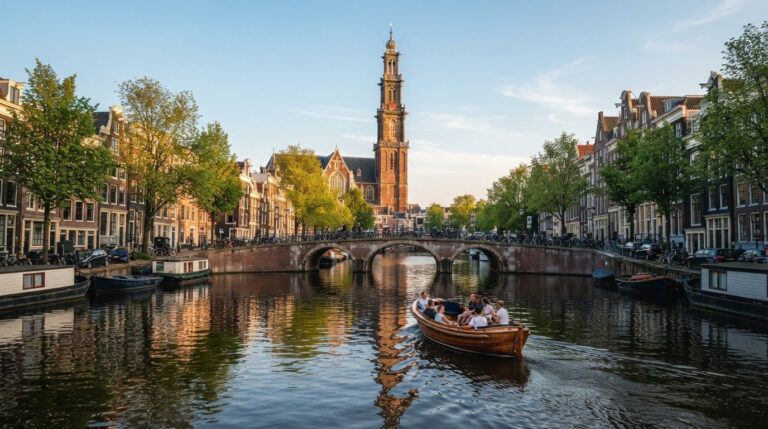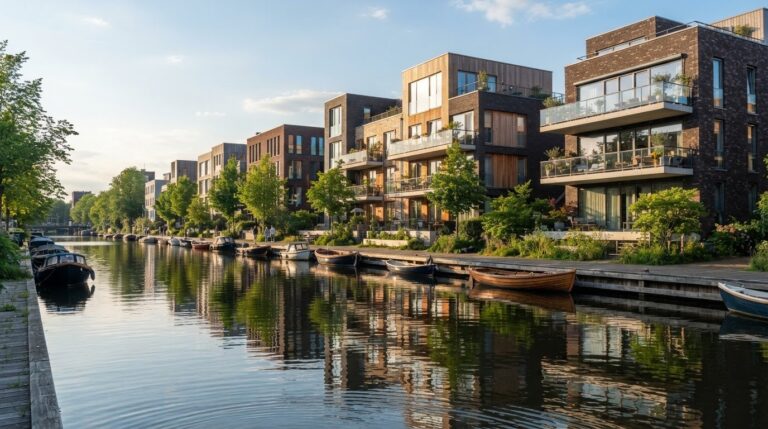
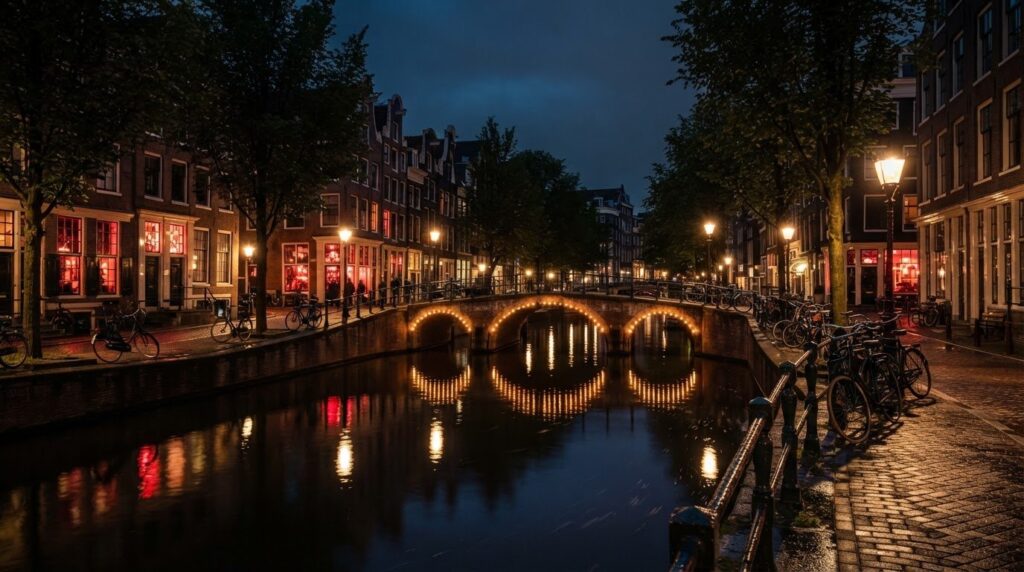
This beautiful sailing route lets you view the surroundings from the water, with historic facades, atmospheric bridges and lively Quays as landmarks. The exact route may vary per cruise. With this handy viewer you know exactly what you can pay attention to, without assuming that the boat stops everywhere or offers the same view over and over again.
Follow the tour in stages: see how the water runs, notice where bridges and bends change the view and pay attention to the beautiful buildings along the quays. This way you keep an optimal track of the route and you see much more than when you only search for one well-known building. The description helps you to explore the area optimally, but does not replace a fixed sailing schedule.
A private cruise with a professional Event skipper on the Water means that you do not have to drive the boat yourself. You can keep your full attention to the beautiful view and your company, while the experienced skipper determines the sailing route. Below you can read how you can follow this great route and which visible features are definitely worthwhile along the way.
Key Points
- Follow the tour on the basis of the water, bridges, quays and facades.
- Use the stages as a guide, not as a fixed sailing schedule or promise of stops.
- First, look at the street scene as a whole, and then choose some details to pay attention to.
- Prepare with weather-appropriate clothing and keep things on board organized.
- With a private cruise and professional skipper, your company can enjoy the route together.
What makes a sailing route from a central station to a historic neighborhood special?
From the water you look differently at the connection between facades, quays and bridges. A route is therefore more than a line on a map: the view changes as you move along the water. A Bend, Bridge or row of buildings can form a natural transition to the next part of the tour.
Landmarks make a route description useful because they connect the different sections of water. They help you orient yourself, but do not mean that the boat stops there or that every view is guaranteed. The skipper chooses the actual sailing route based on the conditions and the sailing. Therefore, use the description as a guide for what to look out for.
How to read the route from the water
Start with the direction of the water. Then pay attention to bends and bridges: they often change the view and help you divide the tour into stages. Choose a landmark for each piece, for example a striking bridge or a row of facades along the quay. Memorizing the order of those images allows you to follow the route without constantly looking at a map.
A landmark is something to look forward to, not a fixed mooring. The boat can pass a bridge or building without stopping. Therefore, keep looking at what is really visible from the deck and link striking images to the water that precedes it.
What changes when you look from a boat?
From the street you can usually see a facade up close and at eye level. From the water, facades and quays more often converge in one continuous image. Pay attention to the line of the quay, the differences between adjacent properties and the way a bridge frames the view. This gives you a different picture of the relationship between water and buildings.
How much detail you can view depends on the pace of the cruise and on your viewing angle. When the view changes quickly, choose one eye-catcher at a time. First look at the whole and then pay attention, for example, to the roofline, window layout or shape of a bridge. This way you don't have to remember everything at once.
The canals also have a history that can deepen your experience. Read more about the historical development of the canal system and then see how waterways, quays and buildings together form the cityscape. The background gives context to what you see, without you having to know each building individually.
During the cruise, keep these points of attention:
- Follow curves and bridges to recognize the order of the route.
- Choose one facade or bridge per piece of water to consciously view.
- Please note that a landmark does not mean a stop.
- Stay flexible, because the route and lines of sight may differ per cruise.
This approach allows you to look around relaxed and still continue to follow the line of the draft. The sequence of water, bridges and buildings makes the route interesting, even if you don't know every landmark in advance.
How is the sailing route going step by step?
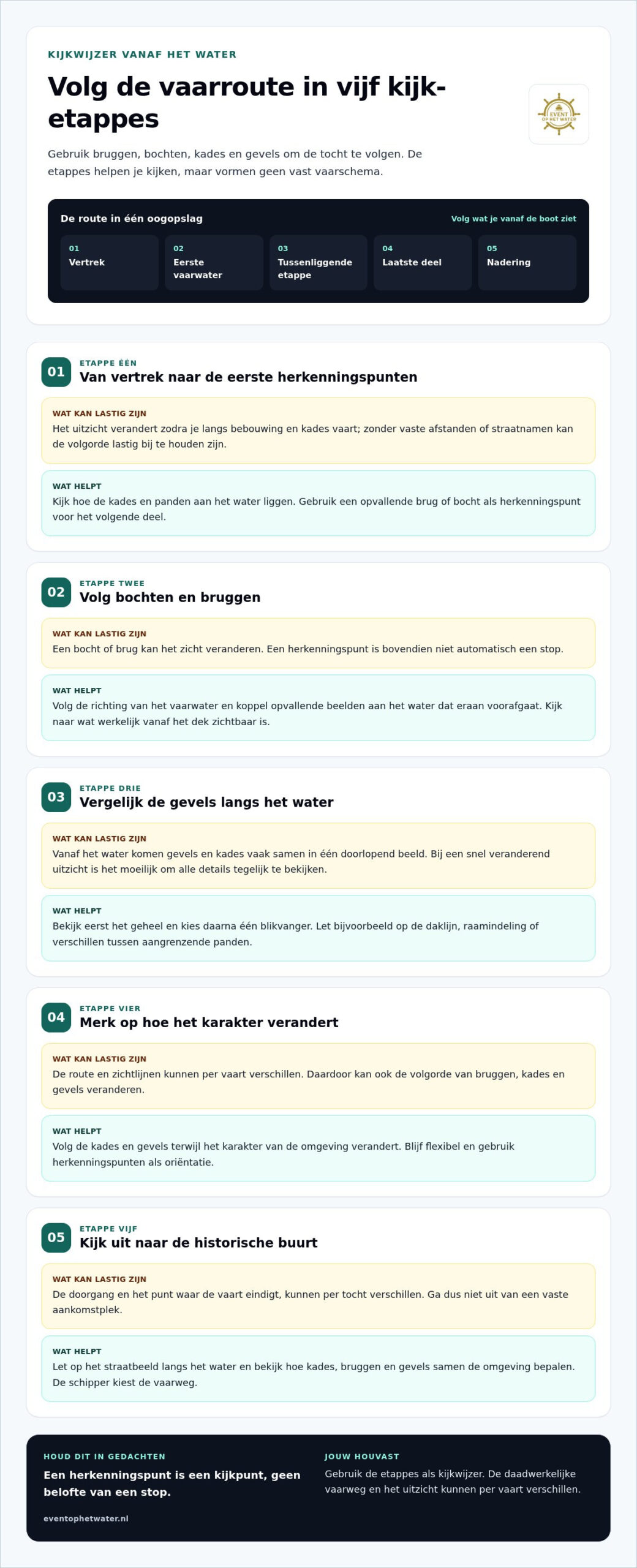
It is best to follow a cruise from the starting point to the historic district as a series of stages. The order below is a practical guide, not a fixed sailing schedule. The skipper determines the route and passage based on the conditions during the cruise. Therefore, always look at what is visible from the boat.
From starting point to the first landmarks
After departure, pay attention to how the view around the departure point turns into buildings along the water. Look at The Shape of the quays and the way buildings stand on the water. Further on, a Bend, Bridge or striking facade can help to divide the draft into parts. This way you keep track of the order without needing fixed distances or street names.
- Departure: notice how the view changes as you sail past buildings and quays.
- First sailing water: follow the shore and use a bridge or bend as a landmark.
- Intermediate stage: compare the facades along the water and pay attention to similarities and differences.
- Last part: follow the quays and facades as the character of the environment changes.
- Destination: pay attention to the streetscape along the water as the tour approaches the historic neighborhood. Do not assume a fixed mooring.
These steps will help you view the trip, but do not mean that every cruise takes the same waterways. A landmark is not an announced stop. The skipper sails the boat and chooses the passage; you can view the surroundings calmly.
The last leg to the historic neighborhood
As the tour approaches the historic neighborhood, the image along the water may change. Pay attention to how Quays, bridges and facades together determine the environment. Look at what you actually see from the boat and use landmarks as orientation, without expecting a particular place of arrival.
The passage and the point where the cruise ends may vary from trip to trip. Therefore, take into account a different order or a changed view. With a skipper at the helm, you don't have to determine the sailing route yourself and you can keep your attention on the surroundings.
What sights do you see along the way and how to recognize them?
What you see along the way depends on the chosen route, the passage and your viewing angle. Historic facades, bridges and Quays are visible parts of the streetscape that you can pay attention to. The exact sights may vary per cruise. So use the vantage points below as clues, not as a promise that you will pass each building.
Distinguish between what you can perceive and how you experience the environment. A facade, bridge or quay wall is visible; words like picturesque or lively describe a personal impression. This way you can tell what you see together without confusing atmosphere and fact.
Recognize historic facades, bridges and quays
First, look at facades as a whole. Pay attention to the roofline, the placement of windows and the way different premises are adjacent to each other. After that, look at bridges and quay walls. Their location shows how the fairway is delimited and where the view changes. From the water you can recognize the streetscape by the coherence between facades, bridges and quays.
A bridge can briefly frame the view, while a quay forms a clear line along the water. By looking at those elements together, you get a more complete picture of the environment than if you focus on one facade. Limit your description to visible features, such as shape and location, unless you also have reliable information about the history of a specific building.
Viewpoints that stand out from a boat
From the water you have a different angle of view than when you walk along a facade. Therefore, look not only at windows at eye level, but also at the top of buildings and the transition between facade and roof. Also pay attention to gaps between buildings. See-throughs can change quickly during the cruise, so look around you again regularly.
Use this watch list to observe calmly. The points are not fixed stops and may appear differently depending on the route:
- The facades that stand one after the other along the waterfront.
- Differences in roof lines and window layout.
- Bridges that mark or frame the view.
- Quay walls and the transition between water and street.
- Views between buildings that become visible during sailing.
The viewing list is about visible forms and parts of the streetscape. How you experience it is personal: a row of facades can seem calm, stately or Lively to you. Keep that distinction when you tell what you see along the way. Thus, an impression does not accidentally sound like a historical fact.
You can look around yourself and at the same time listen to explanations about the environment. Ask a question when a bridge, facade or view makes you curious. A professional skipper sails the boat, so that you and your company can focus your attention on the water and the surroundings. What exactly becomes visible depends on the route and the conditions during the cruise.
How do you prepare for the cruise and get more out of the route?
A little preparation will help you notice more on board and stay relaxed. You don't have to memorize a roadmap. Think in advance what types of details you find interesting, choose clothes in which you are comfortable, and take time to look around. In this way, the cruise also becomes a moment to experience together.
What do you take with you and what do you pay attention to?
The weather can play a role during a cruise. Choose clothes that match the weather forecast and in which you will be comfortable staying on board. Consider protection from wind or precipitation when needed. What you take with you depends on the day and the boat. Keep your things organized and only bring what you expect to use so you can sit comfortably and look around.
Before leaving, think about what details you would like to see. You may want to pay attention to facade shapes, bridges, or the way Quays frame the view. A short look List gives direction, but leaves room for surprises. After all, the route and sight lines can be different.
- Choose clothes that match the weather conditions.
- Think of some details you want to pay attention to beforehand.
- Keep your things organized so you can sit comfortably and watch.
- Only take pictures when you can safely do so and are firmly seated.
Your attention and comfort go for a photo. Stay in a place where you are stable and don't just move for a better view. A fleeting view is not a reason to risk your balance or that of a fellow passenger.
Follow the surroundings yourself or relax with a skipper?
Self-orienteering can be pleasant if you like to actively follow the route. You can look for landmarks and pay attention to how the view changes. Keep in mind that your attention will then turn to your surroundings or a map more often. If you prefer to look quietly and talk to your company, leave the route guidance to the skipper.
On a private cruise, a professional skipper controls the boat and takes into account the conditions on the water. So you don't have to sail the route yourself. Feel free to ask a question when a bridge, facade or view makes you curious. By observing calmly and asking questions, what you see is given more context.
If you are celebrating something special with a group, a party boat can offer a festive setting. Your company can enjoy the route together and catch up in between. When a landmark comes into view, you can focus your attention on it for a while and then continue relaxed.
Experience the sailing route as a private cruise with an event on the Water
A route over the water becomes a shared experience when you sail it with your own company. During a private cruise you look together at the facades, bridges and quays that come into view along the way. Event op het Water provides private cruises for private groups, with a professional skipper. So you don't have to drive the boat yourself and you can keep your attention to the view and each other.
Choose an atmosphere that suits your plans. Do you want to enjoy the view, or is a drink better suited to the occasion? The group size also plays a role in choosing a boat and arrangement. Event op het Water offers drinks boats, BBQ cruises and larger party boats for business and festive events.
Experience a route together with your company
With a closed group, you can share attention. Point out a striking facade, watch a bridge change the view or just enjoy the moment on board. A drink can go well with that: the route forms the backdrop while you catch up with friends, family or colleagues. This way you combine viewing the environment with time together.
A private Cruise does not mean that every landmark is a fixed stop. The actual route and what you see along the way depend on the speed and the conditions. The skipper controls the boat, so you can keep your attention with your company and the environment. You can interrupt a conversation for a nice look and then enjoy together.
This way you can easily request a quote
Do you want to organize a cruise? Please indicate the desired date, the group size and the occasion with your request. Also describe the atmosphere you are looking for, for example a relaxed sailing together or a festive drink on board. With that information, Event op Vatten can think along with you about a private package and a boat that suits your plans.
You do not have to record every part before you make a request. Start with what is important to you: looking around together, celebrating something or experiencing a special moment on the water with the group. From there it becomes clearer which interpretation fits. This way you keep the preparation clear and you can already look forward to the cruise.
Use the directions to think in advance what you want to pay attention to. On board you can search for those landmarks together without having to follow the sailing route yourself. Share your wishes and let the interpretation match the character of your group.
Make room for a special day on the water
A boat trip starts with a plan to go out together and see the area from the water. Think about the atmosphere you have in mind and what you would like to do together as a company. You don't have to record every moment in advance. There is still room to watch, talk and enjoy the speed along the way.
Do you want to experience the sailing route from Amsterdam CS to the Red Light District as a group activity? List your wishes and choose an interpretation that suits your company. This way, planning begins with a clear picture of the occasion and the atmosphere you are looking for.
Request a quote for a private cruise with your company.
Make your plans concrete and look forward to a joint experience on the water.
Frequently Asked Questions
How long does a cruise from a central station to a historic neighborhood take?
There is no fixed duration for each cruise. The time depends, among other things, on the chosen route, the boat and the conditions when sailing. It also makes a difference whether the speed is mainly about the view or is part of a more extensive group moment. When planning, take into account the agreed sailing time and leave room for changes along the way.
What sights do you see during this sailing route?
That depends on the route and what is visible from the water. You can pay attention to historical facades, bridges, quays and vistas between buildings. A separate building is not guaranteed on every route. Choose in advance some details that you find interesting, such as roof lines or bridge shapes. This way you have something to look forward to together without focusing the entire trip on one landmark.
Can the sailing route change during the trip?
Yes, the route and passage followed may vary. The skipper determines the sailing route and takes into account the conditions on the water. As a result, the order of landmarks may be different than you expect in advance. Use a route description as preparation, not as a fixed itinerary. Stay curious about what you encounter along the way and follow directions on board.
Is a private cruise suitable for sightseeing together?
Yes, a private cruise is suitable if you want to look around with your own company. You can point out details to each other, such as a striking facade or a glimpse, and then continue talking or having a drink. Event op het Water provides private cruises for private groups and offers various boats and packages. This way you can tailor the content to the size of your company and the atmosphere you are looking for.
What do you see from a boat that you don't see well from the street?
From the water, facade rows and quays can appear together in one continuous image. The tops of buildings, such as rooflines and Gable tops, also stand out from a different angle of view. Bridges frame the view differently each time. First, look at the whole thing, and then choose one detail to pay more attention to. This way you can see how the buildings are arranged along the water.
Do I have to follow the route myself during a boat trip with skipper?
No, you don't have to follow the route yourself or drive the boat. If you like to know where you are approximately, You can look around from time to time. You can also let go of that attention and focus on the view and your company. Ask a question when something makes you curious and enjoy the speed together.
Do you want to experience the sailing route together? Request a quote for a private cruise with Event on the Water.
Disclaimer
Some images on this website are (partially) generated or edited using artificial intelligence (AI). These images serve solely for illustration and Atmospheric impression. The actual boats, locations, arrangements, facilities and performances may differ from what is shown in the image. No rights can be derived from AI-generated images.
To contact us via [email protected] for more info.