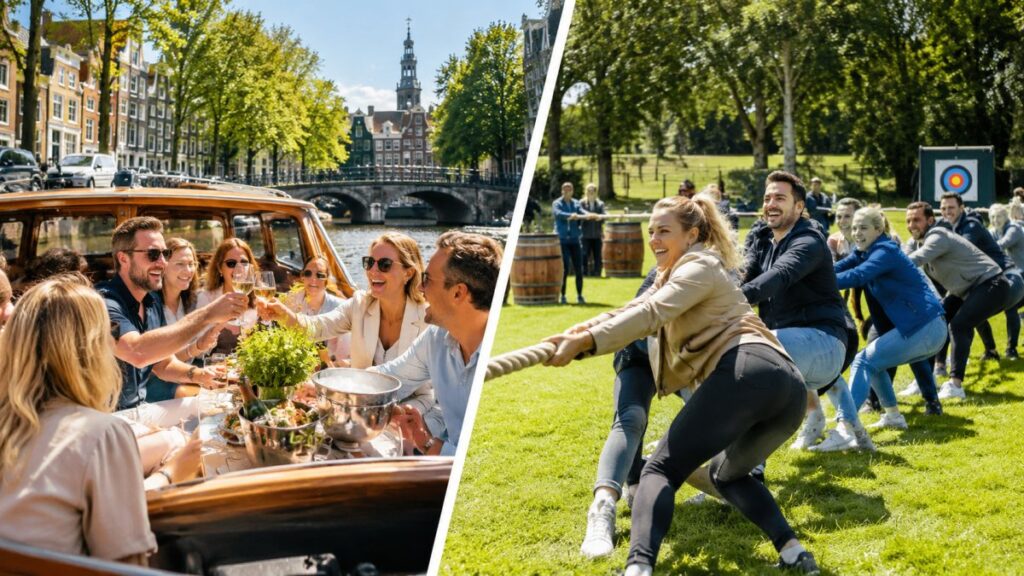
Choose a staff outing based on what your team needs, for example in Amsterdam or at another inspiring location. An outing on the water brings colleagues together on board and lets them experience the surroundings from the water. A land activity, on the other hand, offers space for a program at a fixed location. Compare unique staff outings on the water with land activities at the location, weather, duration, costs, and the purpose of the day.
For a drink, active team building or a joint celebration at Event on the Water, a suitable arrangement is important. Also consider whether colleagues would prefer to be outside, prefer to sit comfortably together, or would like to combine different elements on one day. This comparison helps you weigh the atmosphere and practical requirements of an employee outing on the water against those of a land activity.
In this comparison, you can see how to weigh the options, from the influence of the weather to the structure and costs of the program. By combining unique team outings on the water with land activities, you can clearly see which type of outing fits your team goals. This way, you can choose accordingly.
Key points
- Choose an activity that fits the purpose of the day: relaxing time together, active collaboration, or celebrating something together.
- Take into account the influence of the weather and consider how the activity can continue under less favorable conditions.
- Choose the location based on the group and the desired atmosphere: on the water you experience Amsterdam from the canals, on land you choose a program at fixed locations.
- Compare the required time and what is included in the activity to determine which setup suits your planning.
- Map out the key cost factors and team wishes before choosing a staff outing.
Weather conditions and alternative activities
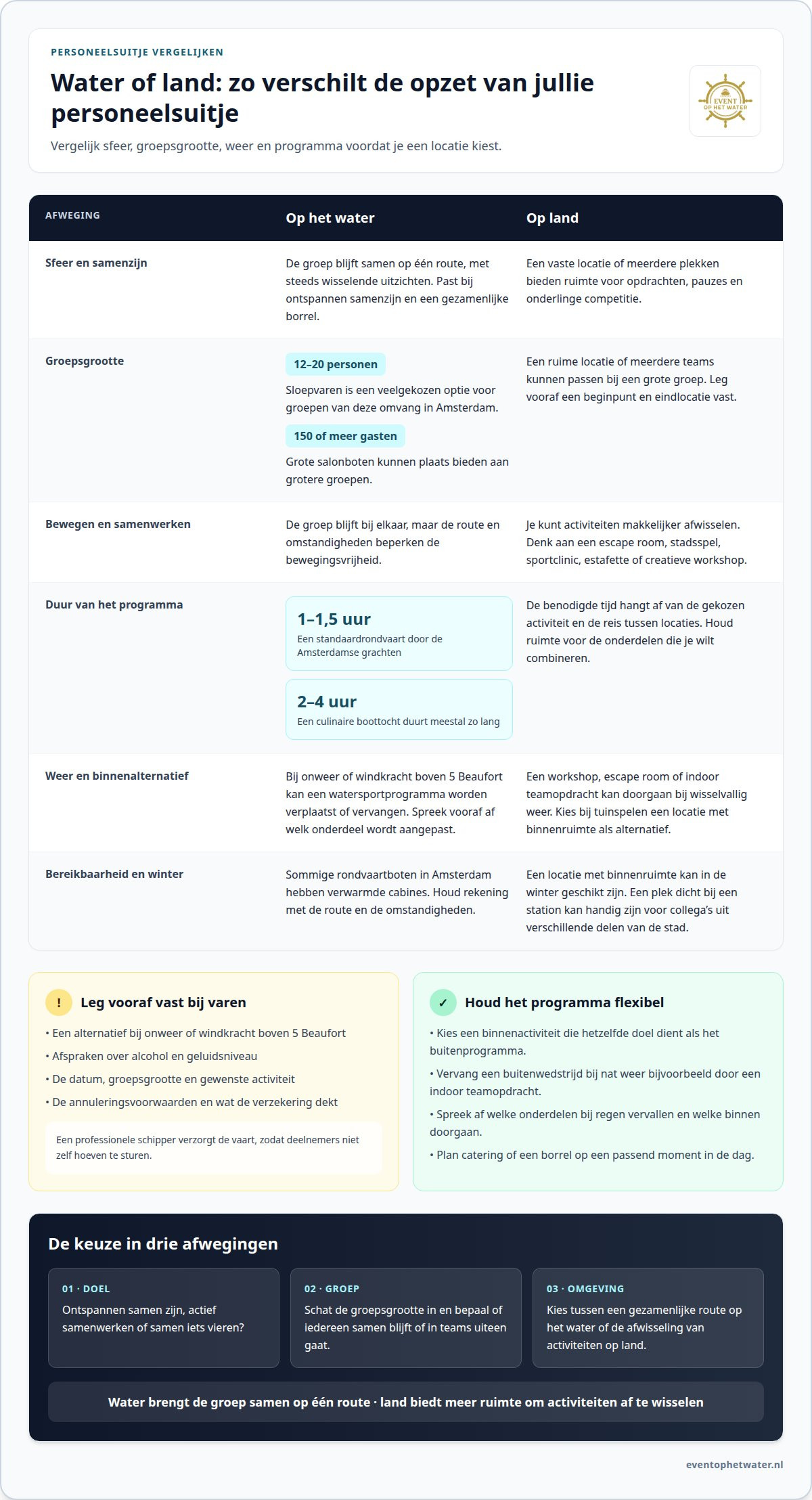
In the event of thunderstorms or wind speeds above 5 Beaufort, a water sports program may be rescheduled or replaced. Therefore, please consider an alternative in the schedule before the day begins. For example, choose an indoor activity that serves the same purpose as the outdoor program. If an active activity is cancelled, a workshop can still be held within the group to allow for collaboration. This ensures the program remains in place, even if the weather changes.
A cultural activity or city walk is suitable for colleagues who like to look at and discover things together. For example, create a route with short tasks around facades, bridges, or artworks. Keep the route flexible: in case of rain, you can shorten the outdoor stop and spend more time indoors. A cultural activity can serve as the theme for an evening walk. Choose a final destination where the group can sit together afterwards.
A workshop provides a fixed location and a shared task in changeable weather. Think of a creative assignment where teams design or create something. For outdoor games like pétanque, a location with outdoor space and an indoor alternative is practical. Agree in advance which parts fall through in the rain and which continue indoors. This way, the group doesn’t have to come up with a new program at the last minute.
Sport and action require an alternative that suits the effort and the surface. An outdoor competition may be less suitable in wet weather; replace it, for example, with an indoor team activity. In water sports, the weather can also be decisive. Determine in advance which part will be adjusted as the conditions change. This way, the goal, such as moving or working together, remains intact without having to postpone the planned activity at any cost.
Discuss alcohol and noise level arrangements in advance with a group tour. A professional skipper will operate the tour so that participants do not have to control the boat themselves. When booking, provide the date, group size, and desired activity. Please read the cancellation terms that come with the booking before agreeing to them. Also consider various risks: someone on board may slip, while exercising on land requires physical effort. Check which liability or accident insurance applies to participants and what it covers.
You can combine an activity with catering or a drinks reception by including both elements in one program. Think of a BBQ meal or a drinks reception after a joint activity. Note when the meal or drink time takes place and how much time it takes. This way, the closing event fits the pace of the day and colleagues can chat together, even if the outdoor program changes due to the weather.
Staff outings at various locations
A staff outing on the water brings the group together on a single route, with ever-changing sights. On land, it is easier to combine locations and tasks, although the group sometimes has to travel between locations. A joint boat trip is suitable for colleagues who want to relax together. An escape room or city game is more suitable when collaboration and puzzle solving are central. The practical consideration: on board, the group stays together; on land, moving around is easier.
In Amsterdam, you could consider a city quiz, an escape room, or a walking tour with tasks. The canals and historic streets form the backdrop. With a quiz, you can easily form teams and keep track of points; with an escape room, it’s about collaboration under time pressure. Choose an activity that suits the pace of your colleagues, so that sporting experience isn’t decisive.
Outside the city center, parks and outdoor spaces offer space for garden games, sports clinics, or creative workshops. Think of pétanque, a relay race, or a collective painting project. This way, you can combine movement with breaks. Set a starting and ending point in advance. This keeps the route organized, especially if the program includes multiple activities.
A boat can bring smaller groups closer together; in Amsterdam, groups of 12 to 20 people often choose to sail in a sloop. Large saloon boats can accommodate 150 or more guests. This difference partly determines whether everyone stays together or splits into smaller teams. A drink on the water is perfect for a relaxed afternoon, while an activity on land offers more room for assignments and competition among colleagues.
In the winter, a location with indoor space may be suitable for a workshop or escape room. Some canal boats in Amsterdam have heated cabins, which can make a cruise more comfortable. Also consider accessibility: an activity near a train station can be convenient for colleagues who come from different parts of the city. A central location makes starting the activity easier; an outdoor location may offer more space.
Hiking offers a shared atmosphere and a relaxed environment, but the route and conditions limit your freedom of movement. On land, activities are easier to alternate, although the group sometimes has to travel between locations. For fun without the pressure of competition, a shared trip is ideal; for active team building, a city assignment or sports clinic is suitable. Therefore, first determine what kind of group atmosphere you are looking for and then choose the location.
Make the choice concrete with three steps: determine the goal, estimate the group size and choose an appropriate environment. A small group can experience a route through the canals together; a large group can benefit from multiple teams and a spacious location. If you want to align your plans for Amsterdam, then discuss the options for your staff outing.
Costs and starting prices for team outings
The available time determines how many activities you can combine in the program. A standard cruise through the Amsterdam canals takes about one to one and a half hours. That fits in with a short joint activity, for example before a dinner or drinks. A culinary boat tour usually takes two to four hours. This allows you to combine sailing and eating together, without having to set aside a full day.
The type of activity also makes a difference. Themed cruises in Amsterdam usually last between an hour and a half and three hours. Choose a program that includes a quiz or other themed activities in addition to the cruise. A team outing with sports and a final event requires more time: expect at least 3 to 4 hours for a full day. When organizing the event, take into account travel time and scheduled breaks so that the program does not feel rushed.
For an excursion outside Amsterdam, more time is often needed. Boat trips outside Amsterdam usually take half to a whole day. That requires a different planning than an activity in the city. Therefore, first determine how much time the group has available. Then choose the activity and any additional elements accordingly. This way, you avoid having transportation or an extra component take over the relaxing nature of the day.
Divide the program into three parts: reception, main activity, and conclusion. A short cruise can, for example, precede a joint drink. For a more extensive outing, you can combine a sports activity or workshop with a meal. Give each part sufficient time. This leaves room for conversations between colleagues and makes the day not feel like a series of quickly-interconnected tasks.
The price depends on the activity, duration, group size and any combinations. Therefore, compare not only the duration but also what the program includes. A short activity with a separate closing differs from a longer arrangement with food or drinks. Place the components side by side to determine which arrangement suits your planning and budget.
For a fair comparison, record the total time required for each option, the main activity, and the conclusion. Think, for example, of a cruise lasting one to one and a half hours followed by a drink, or of a sporting day of at least 3 to 4 hours. The first option requires less time for the activity itself; the second allows for more action. Choose what suits the purpose, not just what appears on paper to have the most components.
If you plan an extensive program, be sure to determine in advance which elements are essential and which additions remain optional. For a culinary tour of two to four hours, eating together is an important part of the experience. A shorter themed outing of one and a half to three hours, on the other hand, places greater emphasis on the activity. With that choice, groups can allocate their available time in a targeted manner and enjoy relaxing time together.
Choosing a team outing based on goals and team composition
Start with the goal of the day and make it concrete. If you want to get colleagues to work together, choose tasks that require discussion. For example, in an outdoor city quiz, teams gather together to answer questions. If relaxed contact is central, choose a joint activity with space for conversation. For an company outing As a thank-you, competition doesn’t have to play a major role. Adjust the program to what your team wants to experience together.
Then look at the composition of the group. A team with different ages and fitness levels benefits from activities with different roles. In a quiz, one colleague can be the one who searches for answers, while another notes them down. A sports activity, on the other hand, requires a pace that participants find comfortable. Discuss beforehand whether moving, creative work, or quiet togetherness is appealing to most colleagues. This makes the team outing more accessible and everyone can contribute.
The size of the group also influences the choice. Corporate outings in Amsterdam are usually suitable for groups of 8 to 500 people. For a game like Red Light Green Light, groups of 30 to 500 people are mentioned. Such differences make it clear why you first need to determine the number of participants. A smaller group can easily discuss during a joint assignment. With a larger group, smaller teams and a clear game explanation are important for overview.
If collaboration is the main goal, choose an activity with a shared task. A city quiz can stimulate communication and task distribution without physical strength being decisive. For a team that wants to get out of their comfort zone, choose an active task or sporting activity. If you want to celebrate, end the program with a drink or a shared meal. Link each choice to a goal so that the components reinforce each other.
Then make a simple decision based on three questions: what should the group experience, how much movement is appropriate, and how important is free time for conversation? An activity on the water brings colleagues together in one setting. On land, it is easier to switch between, for example, a quiz, a workshop, and a joint closing event. A new team could benefit from assignments in mixed groups; a close-knit team, on the other hand, might enjoy a relaxing outing without any competitive elements.
Finally, formulate the choices in a short program. Note the goal, the group size, the desired activity, and when colleagues can talk freely. Consider an active start with a joint conclusion. Also take into account colleagues who prefer not to exercise or speak for a large group. A suitable role within the same activity, such as timekeeper for a game, makes participation possible. This way, participation is possible. company outing to the people who enjoy it.
Costs and price factors
The cost of a staff outing depends on the group size, duration, and the chosen activities. An activity for a small group requires a different setup than a program for an entire department. It also makes a difference whether you plan only one activity or add food and drinks. Therefore, compare complete programs in Amsterdam, not just the main activity. This way you can see which elements fit within the budget and where your priorities lie.
When organizing outings on the water, factors such as the duration of the trip, the type of arrangement and any catering are taken into account. A short trip without a meal has a different composition than a culinary activity with a dinner. On land, the location, guidance, and necessary equipment play a role. A workshop, for example, requires suitable space and equipment, while a city game is more about tasks and guidance. The price depends on the chosen activity, duration, group size, and included components; the amount is determined after a request for a quote.
Make the budget clear by first identifying what you value most. For example, list three wishes at the top: eating together, actively collaborating, or relaxing above all. Then compare the options with the same elements. A game with tasks and guidance is not directly comparable to a drink party where food and drink are central. Note what is included in each proposal, such as equipment, space, or catering. This way, you avoid having to add extra elements later on to cover an attractive total amount.
The size of the group also influences the choice and organization. An activity for 12 colleagues can be set up differently than a program for 100 participants. Larger groups may require multiple supervisors, separate teams, or additional materials. This applies, for example, to a city game where teams perform tasks simultaneously. Therefore, agree on how many participants you expect and whether that number is final. A realistic estimate helps to compare proposals in terms of content.
The excitement of a program doesn’t have to come from expensive extras. A simple quiz in Amsterdam can already create fun and conversation, while a creative workshop yields tangible results. Determine which experience you want to offer and allocate the budget accordingly. If catering is important, compare packages that include food or drinks. If you want games and team building activities, focus the budget on tasks and guidance.
Also keep practical aspects in mind in the budget, such as transportation to a location and any additional costs associated with the program. List all items in one overview: activity, catering, location, and transportation. Also indicate the maximum amount per person, so that proposals are based on the same principles. This way, you can choose between a compact activity and a more extensive day program, without relying solely on impressions or individual components.
Event on the water
The Water event tailors a staff outing to the water to suit your group and purpose. Think of a relaxed shared trip, a drinks moment or a BBQ arrangement. With a Private Canal Cruise or Amsterdam Canal Cruise, you experience the city together from the water. This way, the cruise forms one clear program component, without you having to combine different locations yourself.
If you want to have a nice chat, a Borrelboot Arrangement is perfect. If you want a meal as part of the trip, choose a BBQ Boot Arrangement. The boats are rented with a professional skipper and include unlimited beer, wine and soft drinks. When you apply, let us know what you want to celebrate, how many colleagues are going to join you and what atmosphere you have in mind. This way, the proposal aligns with your plans.
Contact Event op het Water to discuss your staff outing in Amsterdam.
Give your staff outing a suitable purpose
Choose an activity that fits what your team wants to experience together. Compare water-based team outings with land activities in Amsterdam and decide which atmosphere best suits your goals. Also think about what colleagues should take away after the event: new conversations, a shared achievement, or a memorable memory.
Make your preferences clear before taking the next step. Note down the goal for the day, the desired atmosphere, and what is practically important. This will make it easier to discuss a program that suits the team.
Make room for a day when your team creates new memories together. Have fun organizing!
Frequently Asked Questions
How do you choose the best team-building activity for your team in Amsterdam?
First, decide what you want to achieve together: relaxed contact, a festive conclusion, or working together on a project. Then choose an activity that suits the group and the available time. Write down one main wish and one hard condition, such as little travel or space to talk quietly. Use those criteria to evaluate options, rather than focusing solely on the theme.
What unique employee outings on the water are there in Amsterdam?
You can choose between a Private Cruise, a Barboat Arrangement, or a BBQ Boat Arrangement. A private tour is perfect for a group that wants to sail together; the barboat emphasizes informal socializing. The BBQ arrangement includes a barbecue at the activity. Choose the type of tour based on the atmosphere and activities you are looking for for your staff outing.
What are the average prices per person for a corporate outing on the water versus on land in Amsterdam?
There is no fixed average price for each outing on the water This applies to on-land activities. The costs depend on, among other things, the group size, the duration, and what is included in the program. For example, an activity with catering differs from a workshop, where mostly guidance and materials are needed. Therefore, compare proposals with the same components and look at the total cost per participant, not just the basic activity.
Which activities are suitable for bad weather, limited mobility, or different ages?
In bad weather, a workshop, quiz, or cultural activity with indoor space are practical options. For participants with limited mobility, an activity with few movements and plenty of sitting time is more suitable; the accessibility of the location and route also determines whether it is suitable. Tasks for different age groups that do not emphasize speed or physical strength often work well. This way, everyone can participate in the same joint activity from a suitable role.
Disclaimer
Some images on this website are (partially) generated or edited using artificial intelligence (AI). These images serve solely for illustration and Atmospheric impression. The actual boats, locations, arrangements, facilities and performances may differ from what is shown in the image. No rights can be derived from AI-generated images.
To contact us via [email protected] for more info.